Showing posts with label moustache. Show all posts

Thursday, 1 November 2012

Historical Men of Movember: Frank Oliver

While the concept of growing moustaches in November (or Movember) to raise awareness for prostate cancer is a recent phenomenon, moustaches themselves have a long history.  Throughout November, I will be featuring a variety of historically awesome moustaches. If you would like to donate to the Movember cause, please consider donating to Adrian Petry who is participating in honour of his great-grandfather who passed away from prostate cancer.

In honour of my new position as junior researcher at the Canadian Museum of Immigration at Pier 21, I thought it would be fitting to present Frank Oliver as the first candidate for this year's historical moustache tour. Between 1905 and 1911, Mr. Oliver was the Minister of the Interior, which at that time made him responsible for the regulation of immigration. He accomplished many significant things during his time as a politician, including the growth of a magnificent moustache.


Frank Oliver

 Although the hair grows gray...

File:Frank Oliver2.jpg


...the moustache stays the same

Frank Oliver started his career as journalist, training in Toronto and Winnipeg before settling in Edmonton in 1880.   Once there, Oliver founded the Edmonton Bulletin, which became the first newspaper in what would later become Alberta. Apparently running the newspaper didn't keep Oliver busy enough so he decided to try his hand at politics, first as a member of the Legislative Assembly of the Northwest Territories and then as a Liberal Member of Parliament.  In 1905, Oliver became the Minister of the Interior under Prime Minister Wilfrid Laurier, overseeing significant changes to Canada's immigration policy.

Shortly after assuming his new position, Oliver laid out plans to make immigration policy more restrictive.  Unlike his predecessor Clifford Sifton (who had a respectable moustache himself), Oliver did not favour the unregulated flow of immigrants into the country for the sake of filling the prairies with farmers. This open-door policy led to the immigration of many Eastern Europeans and there was public concern they would not assimilate to Canada's Anglo-Saxon norms.  Oliver was a staunch supporter of the British and made it known that the most desirable immigrants were of British and American origin. The Immigration Acts of 1906 and 1910 drafted under Oliver reflected this hierarchical preference for certain immigrants as they greatly expanded the prohibited classes of immigrants.

As biased as I am toward immigration history, Oliver did not devote all his time as minister to crafting immigration policy.  Or to growing his moustache.  When hot springs were discovered in a little place called Banff, Alberta, Oliver led the effort to have the area set aside for the people of Canada, leading to the creation of Canada's first national park.  He also played an important part in influencing the powers that be to make Edmonton the capital of the new province of Alberta rather than Calgary.   Perhaps it is our friend with the fine follicles that is responsible for initiating the friendly feud between these two fair Alberta cities.

Check back soon for more delightfully moustached men. 

Tuesday, 29 November 2011

Movember Moustaches - Part 4

This blog is the fourth and final installment of my Movember Moustaches series featuring historical moustaches to coincide with the Movember campaign to raise money for prostate cancer. To find more about Movember, please click here. To donate to a specific 'stache, check out the River Riders Team.


The end of November has arrived and soon the women of the world will breathe a collective sigh of relief as their loved ones abandon their moustache experiments.  However, thankfully for you, there is still time to explore one last magnificent moustache entrenched in the annals of history. Without further ado, I present to you His Imperial and Royal Highness Archduke Franz Ferdinand.


Besides his impeccably groomed moustache, the archduke is perhaps best known for dying.  Sad, but true. His assassination in 1914 was the catalyst that moved the world toward war, and although we all know (or should know) the causes of war were diverse, it is much easier just to blame it on His Royal Highness falling victim to Gavrilo Princip's gun.

While we have all learned about Franz Ferdinand's death, few of us learn about his life. Before the Archduke's unexpected death, he spent some time traveling - hunting kangaroos and emus in Australia and taking a sailing trip from Japan to Vancouver.

The Archduke was also a bit of a romantic. After falling in love with a non-royal, the lovestruck Franz  refused to follow the marriage rules of the Imperial House of Hapsburg which required a royal spouse to be a member of a reigning or formerly reigning European dynasty. It took no less than the petitions of Pope Leo XIII, Tsar Nicholas II of Russia, and Emperor Wilhelm II of Germany to convince Austrian Emperor Franz Joseph to let the Archduke marry Sophie Chotek. Talk about commitment.  Sadly, Sophie was assassinated along with her husband as they rode in their car throughout the streets of Sarajevo.

So there you have it, the man behind the moustache. Until next November, I urge you to keep your eye out for worthy Movember Moustaches throughout the historical record. No moustache is too big or too obscure to tackle.  Requests/suggestions are welcome - and no, Tom Selleck doesn't count, even though he does have a fearsome stache.


Monday, 21 November 2011

Movember Moustaches - Part 3

This blog is the third installment of my Movember Moustaches series featuring historical moustaches to coincide with the Movember campaign to raise money for prostate cancer. To find more about Movember, please click here.

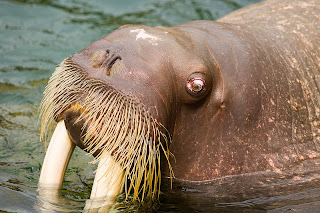
This week I introduce you to the Walrus Moustache. This moustache is so impressive, it even warrants its own Wikipedia page.   While you may have never heard of this facial wonder, you have undoubtedly seen it.  Look no further than Mr. Friedrich Nietzsche.


I was initially hesitant to give Nietzsche attention in the privileged Movember Moustache hall of fame due to my intense dislike for all things philosophy and my difficulties with spelling his name, but in the end, the moustache won.


Nietzsche is best known for his philosophical work in existentialism, nihilism and postmodernism and bearing a resemblance to this walrus. He was a particularly bright fellow that showed an abundance of potential. At only 24 years of age, he was named a professor of classical philology at the University of Basel despite lacking his doctorate or any teaching credentials. I won't mention this to all the PhD graduates currently looking for jobs. In order to take up the teaching position in Basel, Nietzsche gave up his Prussian citizenship, after which he remained stateless for the rest of his life. As it turns out, his life didn't end up being that long. Nietzsche died in 1900 at the age of 55 after being plagued by mental illness, strokes and pneumonia. 

During my extensive research for this blog, I read up on Nietzsche's philosophical perspectives, but I was much too distracted by his moustache to retain any information. I would apologize, but were you really expecting philosophy from a blog about moustaches?

Wednesday, 9 November 2011

Movember Moustaches - Part 2

This blog is the second installment of my Movember Moustaches series featuring historical moustaches to coincide with the Movember campaign to raise money for prostate cancer. To find more about Movember, please click here.

You may not ever meet a man more in love with his moustache than Salvador Dali. It is reported that the Spanish artist was once carrying around a silver bell, and when asked why he had the bell, he responded “I carry it and I ring it so people will see my moustaches.” Note that he said moustaches which is not at all a misnomer if you take a look at the pictures below. While Dali is primarily known as a surrealist painter, I would like to add moustache master to his list of artistic accomplishments.


As you may infer from his distinctive moustache choice (and crazy eyes!), Dali was a tad bit eccentric. At an early age, Dali's parents told him that he was a reincarnation of his dead brother - not the most stable foundation for establishing your self-understanding.

As if his meticulously manicured moustache didn't attract enough attention, Dali had his own unique fashion sense. He often walked around in a long cape with a walking stick at his side and at one party thrown in his honour, he arrived wearing a glass case on his chest containing a brassiere. On another occasion, he arrived to deliver a lecture wearing a diving suit adorned with a jeweled dagger, with a pool cue in his hand, and two Russian wolfhounds by his side. Now that would have been an exciting lecture.  Professors, please take note.

At one point, Dali decided that he needed a pet to compliment his flamboyant personality. Naturally, he chose an ocelot. Babou the ocelot became Dali's favourite companion, even accompanying him into restaurants and on trips.


Despite his oddities, Dali was a superb artist, challenging norms and inspiring future generations of artists.  The legacy of his moustache is almost as great as that of his artistic output, and yet this generation does not seem to find inspiration in his follicle mastery.   The time to do so is now, men of Movember!


Each morning when I awake, I experience again a supreme pleasure - that of being Salvador Dali.
- Salvador Dali

Sunday, 6 November 2011

Movember Moustaches - Part 1

While the concept of growing moustaches in November (or Movember) to raise awareness for prostate cancer is a recent phenomenon, moustaches themselves have a long history.  Throughout November, I will be featuring a variety of historical moustaches that would undoubtedly win any Movember contest.  To learn more about the Movember movement, click here.

The first historical Movember candidate is none other than Ambrose Burnside, a Union general in the American Civil War whom we can thank for giving us the word "sideburn." He was obviously blessed with the ability to grow voluminous amounts of hair on the side of his face and as a result, his name was used to label the very distinctive style.  While General Burnside is known more for his sideburns  than his moustache, the argument could be made that they are in fact one and the same.


Unfortunately for Burnside, his contribution to society is limited to his facial hair. It is quite possible that he focused too much of his attention on grooming his follicles and not quite enough on leading the army. His strategy at the battle of Fredericksburg in 1862 went a little something like this:

Soldier: Great job on taking over the town General! We sure showed those Confederate scoundrels whose boss.

Burnside: Thanks soldier, but I would really love to give those southerners another kick in the pants. Why don't we go chase them as they retreat up that hill?

Soldier: Great idea! I am sure they won't be able to mow us down in their advantageous position on top of the hill. It is quite unlikely that waves of Confederates will rush down the hill and decimate our army.

Burnside's brilliant strategy led to a massive defeat for his army, but maybe it was all for the best. We wouldn't want his military accomplishments outshining his contribution as a style icon.


 This blog originally appeared on March 4, 2009 on my other blog lvanderberg.blogspot.com.